
Caning Sessions in NYC
Caning
Precision. Adrenaline. The option of marks.
Caning in Manhattan
If floggers don't reach you the way they used to, if what you want is sharper, narrower, more decisive contact, you're describing caning. A flogger spreads across muscle. A paddle thuds across a zone. A cane lands on a line, narrow and traceable, and that narrowness pulls your attention to a single point of contact in a way nothing else does.
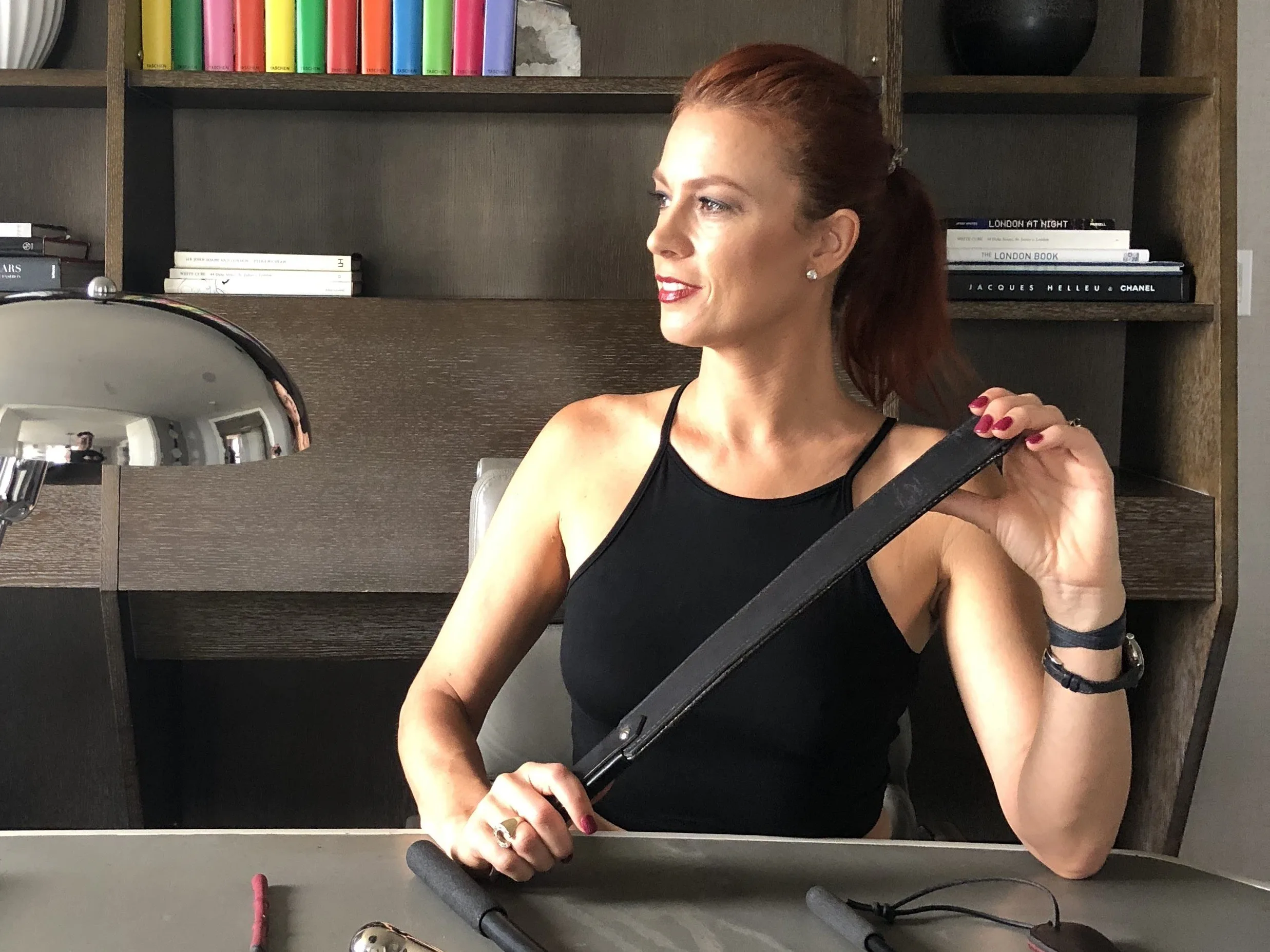
In Manhattan, I work as NYC Dominatrix Viktoria Sway, and the cane is the implement I reach for in BDSM sessions when I want adrenaline up, attention sharp, and the option of using the implement as a fine-pointed instrument to draw on a body. It's also the tool most likely to leave marks. Both facts shape who caning is for and how I run a caning scene in my Manhattan studio.
Caning is one of the impact play tools, and the family page covers the spine: what makes any impact scene work isn't the implement, it's the tension and tone the implement is held inside. Caning is true to that rule. The cane is sharp. The cane is fast. What the cane means is set by everything around it, starting with the Mistress holding it.
Sharp, narrow, decisive contactWhat the Cane Actually Does
Three things almost no other tool does.
It focuses attention. The cane's contact zone is narrow, sometimes barely a few inches across, depending on the cane and the angle. That narrowness pulls the bottom's awareness to a single point. People who struggle to stay present in their bodies often find caning easier than other impact, because there's only one place to look. The mind has somewhere to go.
It draws on the body. This is the part I love. With control, a cane lays sensation along a line, and you can use that line. Crossing strokes, ladder patterns, shifting placement so the next stroke lands where the last one is still ringing, the cane lets me sketch a scene across someone's skin in a way no other tool does. For bottoms who like to track sensation, this is a different kind of pleasure than the body-wide warming a flogger gives.
It gives adrenaline. Caning is fast and sharp. The strike happens before the brain has time to brace. That speed is what produces the adrenaline spike, and that spike is part of why bottoms who want a real Push/Pull or Unpredictability scene tend to gravitate toward the cane. The flogger drifts. The cane wakes you up.
Caning Sessions in NYC: Marks, the Build, the Conversation
Caning leaves marks more than almost any other impact tool. Some bottoms want them. Some don't. Some mark easily, a body that bruises with mild pressure will keep cane stripes for a week. Some don't mark almost at all. So before any caning scene, I ask three things: whether you want marks, don't want marks, or are fine either way; how your body actually marks, easily, slowly, or barely at all; and where on your body is in bounds for marks and where isn't. The answers shape the scene. Someone who marks easily and prefers not to is getting a different caning than someone who wants every stripe visible for a week. Both are real scenes. Both work. How your body marks is one question; what you want from the marks is another, and the answers vary by body and by scene. This is the kind of conversation that happens in pre-negotiation, every time, no matter how experienced the bottom is.
For people new to caning, the marks question matters more than people think. A cane mark is a stripe, specific, traceable, and read across centuries as the signature of this implement. If marks aren't something you want carrying with you for the next several days, say so before the scene starts and we'll work in materials and placements that fade fast.
The cane itself matters too. A well-made rattan or delrin cane from a serious maker like The Stockroom behaves predictably under control; a cheap one doesn't, and predictability is the whole game.
I always build into caning unless someone is very experienced and asks for something different. Hand to flogger to paddle to cane is the standard progression. The cane lands differently when the body is already organized by earlier impact, open, breath steady, bracing already worked through. A cane on a cold body is just a cane. A cane after the build is a different object.
When we get to the cane, I start mild. A cane swung with restraint feels far more like a sharp tap than a strike. I ask where you are on a pain scale. I move up according to what you're saying and what I'm seeing in your body. The conversation between those two, what you're telling me and what your body is telling me, is the scene.
The flogger drifts. The cane wakes you up.
The Tensions and Tones the Cane Carries
Caning is rarely a single charge. The cane is the implement; what it means in the room comes from the tension and tone it's held inside.
Tensions that define caning: Unpredictability, the speed of the strike means you can't prepare for individual strokes, only for the general arc. High Intensity, caning's natural register is decisive escalation. Push/Pull, the cane's adrenaline is a natural fit for the bottom who wants to feel the resistance of the scene against them. Anticipation lives in caning specifically through the pauses between stripes, where you have time to feel the last strike before the next one lands.
Tones that shape caning: Strict / Discipline, the cane is the discipline implement, by lineage and by feel. Forbidden, the cane carries enough cultural weight that even consensual, negotiated caning can sit inside the Forbidden tone. Devotion / Ritual works for the bottom who wants every stripe received as offering. The cane is unusual in that Sensual tone is almost impossible to hold inside it, the implement's nature pulls every scene toward intensity. If you want sensual impact, this is not the tool.
Zings that complete the dynamic: for the bottom, Challenged is the most natural fit, with Used and Cherished available depending on tone. For the top, Sadism, Compliance, and Reaction sit at the center of caning's appeal.
Map your own pattern
Where does sharp, narrow, decisive contact land in your own pattern?
Take the BDSM Blueprint Quiz →Caning sessions in NYC
Who Caning Is For
People who want to be sharp, not soft. People who want adrenaline, not drift. People who want their attention narrowed to a single line of contact, and held there. People who like the option of marks. People who want a scene with a real edge to it.
Caning is also the right tool for bottoms who've been around impact long enough to have noticed that floggers don't fully reach them anymore. The flogger's range tops out earlier than the cane's. If sustained, broad-area impact has stopped doing what it used to do, the cane is often what's next, not because harder is the answer, but because narrower might be. Where a paddle covers and thuds, the cane traces and stings. Bottoms drawn to the cane often discover that what they want isn't more force, it's more precision.
Going Deeper
Caning sits inside a larger framework about how impact carries different meanings depending on tension and tone, the same framework that organizes the rest of the BDSM sessions I run. I teach it in the BDSM Blueprint class.
For the wider map of related topics, see the BDSM overview, or step up one level into impact play.
Explore More
Impact Play
What impact play actually is, how bracing vs. receiving changes everything, and what to expect in session.

Spanking
Impact play in NYC, hand, paddle, crop, cane. How tone changes what your body responds to.
Flogging
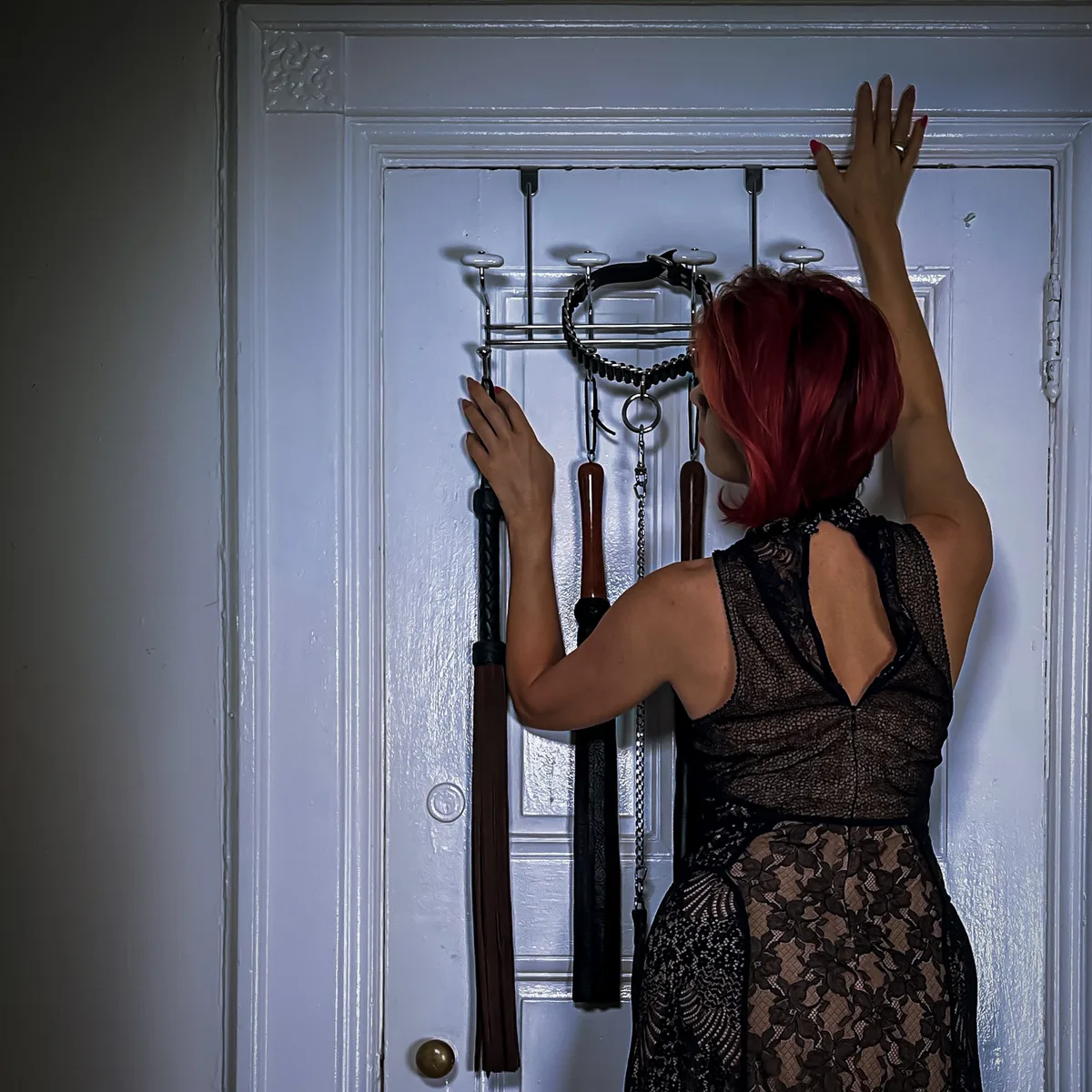
The rhythm tool, wide sensation, soft fall to heavy thuddy, the most reliable doorway into subspace.