
The Goddess Sessions in NYC
The Goddess
Worship received, not performed.
You kneel because kneeling is what your body wants to do. There is a part of you that has been looking for something to worship — something worthy of the reverence you carry but have nowhere to put.
In Manhattan, NYC Dominatrix Viktoria Sway works with the Goddess as one of the FemDom archetypes — the register where divine femininity is the foundation and worship is received rather than earned. A Goddess Dominatrix NYC does not arrive performing reverence-worthiness. She arrives as the figure devotion was already looking for, and the structure of session is what lets it arrive.
What the Goddess actually is
The Goddess is the archetype of reverence. Her power is felt, not enforced. She is not the Disciplinarian holding you to a standard, and not the Seductress pulling you in. She is something elevated — and the submissive's role is to serve, adore, and attend.
This archetype is often reduced to "worship play" — foot worship, body worship, acts of service. Those are activities. The archetype underneath them is older and more structural: the human impulse to devote oneself to something larger than the self. The Goddess meets that impulse. She does not create it. She receives it.
For many submissives, the Goddess activates a register ordinary life has no answer for. The desire to serve beauty. The need to be useful to something larger than the rest of life. The relief of a hierarchy that does not have to justify itself because the body recognizes it as true.
The shadow both people are meeting
The submissive drawn to the Goddess is meeting a shadow around devotion. He may feel that his desire to worship is excessive, irrational, or embarrassing. He may carry a need to be useful that he cannot express in ordinary relationships without it being mistaken for transaction. The Goddess archetype gives that devotion a contained place to live — somewhere it can be offered fully without spilling into the parts of life that cannot hold it. It does not need to be justified. It is the structure of the dynamic.
The Dominatrix embodying the Goddess is meeting her own disowned sense of worth. Women are taught to earn their value through action, through labor, through being useful to others. The Goddess archetype reverses that. Her value is inherent. She receives not because she has done something to deserve it, but because receiving is what she does. For many women, occupying that position — truly, not as a pose — is the harder territory she is being asked to step into.
The word worship is from Old English weorþscipe — literally "worth-ship," the condition of being worthy. The act of worship was originally the act of recognizing worth, not creating it. The Goddess archetype rests on that older meaning. The worth precedes the recognition. The kneeling does not produce her position — it admits a position that was already there.
What makes the dynamic complete is that both people are admitting the same thing on opposite sides of the room. He admits he carries devotion with nowhere to put it. She admits she is the figure that devotion was looking for. The agreement is recognition, not transaction.
The Goddess does not earn your devotion. She receives it as what is owed.
Roles of the Goddess
The Goddess does not arrive as one mood. She moves between registers — the elevated stillness of presence, the structured intent of ritual, the pull of her body, the sharp pleasure she takes in your kneeling. As you read the roles below, notice which one pulls hardest. The charge is not distributed evenly. The role that grips you is the one telling you what you are drawn to underneath the larger pull toward worship itself.
The Divine Ruler
The Divine Ruler does not ask for obedience. She occupies a position so clearly elevated that obedience becomes the natural shape of being in her presence. The submissive who meets the Divine Ruler does not feel commanded — he feels oriented, the way a room reorganizes itself around someone who simply belongs at the center of it. There is no enforcement, no test, no proving ground. The hierarchy is felt before it is named, and once it is felt, refusing it would feel stranger than yielding to it. The charge is in how unembarrassed she is by being above him. A woman who does not perform her position, who simply occupies it, makes deference feel like accuracy rather than submission.
The High Priestess
The High Priestess brings ritual into the dynamic — opens scenes deliberately, marks transitions, treats the room as consecrated. The submissive who meets the High Priestess discovers the difference between play and ceremony: the slowed pace, the named intent, the act performed because it has been instructed and because the instruction carries weight. Devotion takes structure. There is a beginning, a middle, and an end, and each is held with attention. The charge is in being moved through something. Worship that is improvised stays casual. Worship that is structured — that has a shape, an arc, a closing — registers in the body as real because it asks the body to participate in something larger than the moment.
The Muse
The Muse is worshipped not for what she does but for what she is — her aesthetic, her presence, her way of moving through the world. The submissive who meets the Muse serves a vision rather than a task. He notices what she wears, what she chooses, how she carries herself, and the noticing itself becomes the devotion. There is no list of duties to complete, no specific service to render. The charge is in the asymmetry of attention. To be in the presence of someone whose existence justifies your attention — and to know that your attention does not, cannot, alter what she is — is to discover that worship is what unfastens you from the need to perform back.
The Idol
The Idol uses her body as the altar. The submissive who meets the Idol kneels through desire, not despite it — eyes raised, the arousal and the reverence indistinguishable from each other. Worship is not the sublimation of want. Worship is what want becomes when there is something worthy of it. She does not flinch from being looked at this way. She does not redirect the heat into something more polite. The charge is in the discovery that erotic devotion is its own form of purity — that wanting her this much, openly, without apologizing for the wanting, is closer to worship than any clean and disembodied reverence could be.
The Guardian
The Guardian holds space the submissive can fall apart inside. The submissive who meets the Guardian discovers that the same elevation that produces awe also produces shelter — that being small in front of her is also being safe in front of her, because nothing he brings to her can shake her. Confession does not destabilize her. Intensity does not overwhelm her. Whatever rises is met by a presence that does not flinch and does not need to be managed. The charge is in the asymmetry of containment. To be held by someone whose composure does not depend on yours is to be allowed to stop performing wellness — to bring what is actually there, rather than what is presentable.
The Tease
The Tease finds devotion amusing. She receives it with pleasure, sometimes with laughter, sometimes with a tilt of the head that says go on. The submissive who meets the Tease discovers that worship does not have to be grave to be real. Her amusement does not diminish the dynamic — it sharpens it. The kneeling holds. The reverence holds. What changes is the register: the submissive is being enjoyed, watched, faintly mocked, and adored in the same breath. The charge is in being delighted in. To be the object of a Goddess's pleasure — not her judgment, not her instruction, just her pleasure — is to discover that she does not need your suffering in order to take her position.
How the Goddess lives in the framework
The Goddess does not live in a single Tension or Tone. Her registers favor pacing and reverence over confrontation, and the framework reads accordingly.
Tensions that define this archetype: Anticipation dominates — worship is built on pacing, on waiting, on the privilege of not yet. Denial lives close — the withholding of attention, of approval, of the Goddess's gaze. The pleasure of being seen by her is sharpened by the long stretches of being unseen.
Tones that shape this archetype: Devotion / Ritual is the primary register — focus, reverence, intentional opening and closing. Sensual when the worship is body-centered — slow, close, the body of the Goddess as the altar. Humiliation / Degradation when the hierarchy is made explicit — the submissive's smallness relative to her elevation, named rather than implied.
Zings that complete the dynamic: On the receiving side — Giving Service (the satisfaction of attending), Praised (approval from the figure whose approval matters), Obedience (the peace of following). On the leading side — Receiving Service (the pleasure of being attended to), Compliance (the ease of being obeyed without having to enforce it).
Map your own pattern
Which Tensions, Tones, and Zings are most alive for you?
Take the BDSM Blueprint Quiz →How I work as a Goddess Dominatrix in NYC
The Goddess is one of the archetypes I live in most fully. My version of Goddess FemDom is not theatrical — it is felt. I do not perform divinity. I receive devotion because I take it seriously, and because the person offering it can feel that I take it seriously.
In session, the Goddess shows up as worship that has structure and intention. Not a generic "do whatever I say" dynamic, but a specific devotional architecture — what you attend to, how you attend to it, what it means that you are here, on your knees, choosing this.
If you are drawn to the Goddess, you are probably someone who carries devotion without a place to put it. You have a capacity for worship that ordinary life does not make room for. You want that capacity to be received by someone who does not flinch from it or treat it as excessive.
Going deeper
The psychology underneath the Goddess — why devotion grips, what it means to serve something larger, how worship connects to shadow material about worth and worthiness — is central to what I teach. Hidden Logic of Desire works with why certain dynamics grip you the way they do, including the pull toward worship itself. Wake the Erotic Animal connects to the embodiment and aliveness that worship can unlock when the body is allowed to participate fully.
For the wider map of related dynamics this archetype sits inside, see the full FemDom archetypes overview.
Explore More
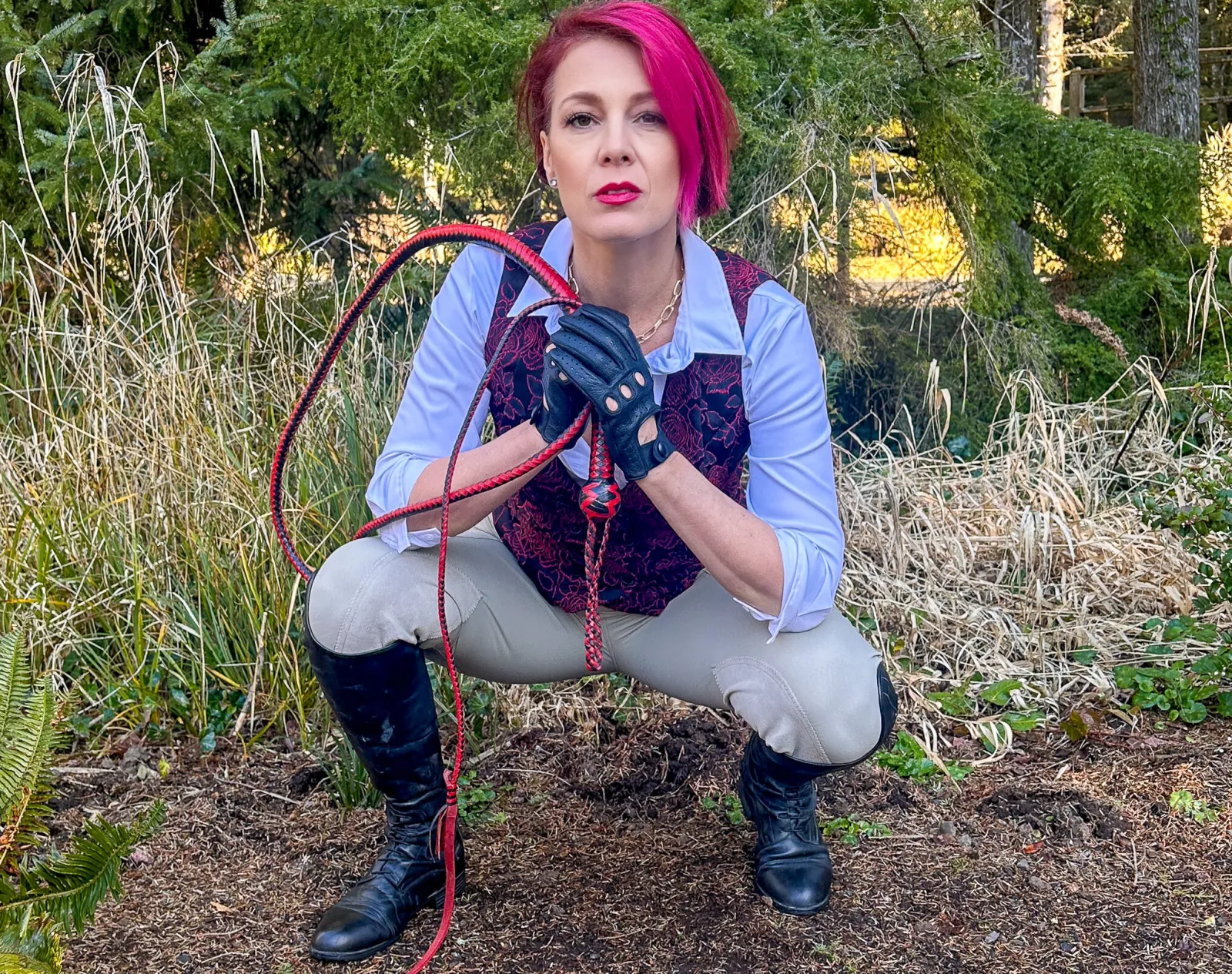
FemDom Archetypes
The recognizable shapes female dominance takes — and what each one activates in you.

Sadistic Mistress
Cruelty as appetite — the archetype where her pleasure in hurting is the foundation, and being the object of it is the point.

Matriarch & Dark Mother
Care that has teeth — the archetype where maternal authority and possessive control meet.